
Chapter 6:
A more efficient government
Find out more about the expected gender and diversity impacts for each measure in Chapter 6: A more efficient government.
Building Canada Strong requires a government that delivers on its priorities. Canadians need public services to be reliable and accessible, a tax system that is easy to navigate, and public institutions that make good use of the resources entrusted to them.
In a more uncertain world, Canada's new government is ensuring that it delivers certainty and stability for Canadians. Being masters of our destiny means having a government that Canadians can understand and depend on to deliver what they need.
Budget 2026 builds on the Comprehensive Expenditure Review and other actions already underway to strengthen our fiscal discipline and ensure that government is focused on what matters most. It introduces measures to improve how we operate, advances the most ambitious tax simplification effort in decades, saving Canadians money and time, and ensures public assets continue to deliver value and support our ambitious economic growth agenda.
Together, these measures will deliver better results, make more efficient use of taxpayer dollars, and focus resources where they are needed most.
Budget 2026 announces initiatives to improve government efficiency and effectiveness to better serve a strong and united Canada, including
- Introducing flat-rate claims for selected tax deductions and credits and simplifying tax filing for Canadians.
- Strengthening outreach to bring more people into the tax and benefit system, thus helping an estimated 150,000 more Canadians receive benefits to which they are entitled.
- A single May 15 deadline for filing tax returns and paying taxes owing, making tax filing simpler and more accurate.
- Federal decisions on major projects within one year, with impact assessments and permit reviews conducted at the same time.
- Investments in digital transformation to improve federal services and make the public service more productive.
- A more streamlined federal financing system, including the proposed merger of the activities of the Business Development Bank of Canada and Export Development Canada.
- Getting more value from federal assets by improving how they are managed, operated, and developed.
These measures build on steps we have already taken, including:
-
Budget 2025's commitment to saving $13 billion annually by 2028-29 through the Comprehensive Expenditure Review, with total savings and revenues of $60 billion over five years when combined with other measures.
-
Reduced spending on external management and other consulting services by 20% over the next three years, achieving annual savings of $0.9 billion by 2028-29.
-
Launching Digital Transformation Canada to improve how government develops, buys, and uses technology.
-
Directing more federal spending toward Canadian businesses and products through the Buy Canadian Policy.
6.1 Simplifying the tax system
Our tax system funds the services that Canadians need. It maintains the infrastructure Canadians rely on, builds the energy projects that power our country, and supports the high-paying careers that those projects create.
Over time, however, the tax system has become more complex. Confusing administrative requirements make it harder for Canadians and businesses to claim the deductions and credits they are entitled to when meeting their tax obligations. As we work to improve affordability and efficiency, it is equally important that we simplify the tax system, reducing the time and effort required from Canadians to engage with it.
Budget 2026 addresses this by launching the most ambitious effort in a generation to improve how Canadians interact with the tax system and reduce the time spent on complying with tax obligations (the time spent by citizens unnecessarily interacting with the government). Through a substantial first package of reforms, we are making tax relief easier for Canadians to access and ensuring that support is delivered more effectively to those who need it.
These measures would directly simplify tax filing for more than 1.5 million people and would mark the next step in a broader effort to build a better, fairer, and simpler tax system that is more accessible. Many of these measures will have the added benefit of making life more affordable for Canadians.
We will build on these efforts by announcing additional measures in the future to make the tax system easier to navigate and administer.
Canada's new government is committed to simplifying the tax system. Measures announced in this budget will reduce the compliance and administrative burden for millions of taxpayers and represent a first step in that direction. Guided by the following principles, we will continue to make tax simplification a core priority.
1. Putting the taxpayer experience at the centre of tax simplification
Simplification should be designed around how taxpayers experience the system in practice, from understanding and meeting their obligations to accessing relief and resolving issues.
2. Making tax rules easier to understand, comply with, and benefit from
Taxpayers should be able to understand their obligations, anticipate how tax rules will apply to their decisions and circumstances, and more easily access the relief for which they qualify.
3. Keeping the tax system responsive to change
Tax rules and administrative requirements should evolve with economic and business practices. Outdated provisions should be reviewed where they create unnecessary complexity or no longer serve their intended purpose.
4. Reducing unnecessary interactions with the Canada Revenue Agency
Simplification should reduce avoidable reassessments, extension requests, filings, and other administrative touchpoints with the Canada Revenue Agency (CRA). Digital services should make interactions with the CRA simpler and more efficient, rather than reproducing existing complexity online. This will reduce the time tax—minimising the time citizens spend interacting with government.
5. Reducing burden while preserving fairness and integrity
Reporting and procedural requirements should be focused on cases where they materially support compliance, fairness, and revenue protection. Businesses and individuals should spend less time on tax administration while maintaining the intended operation of the tax system.
Implementation commitment
We are committed to making quick, meaningful progress toward a simpler tax system, recognising that deeper reforms will take time and sustained effort. A second tranche of measures toward tax simplification will be announced in the Spring Economic Update 2027.
Making it easier for Canadians to manage their taxes
Every year, Canadians spend hours navigating complex tax rules, deadlines, and payment requirements. To save Canadians time and effort while making it easier for them to meet their tax obligations, Budget 2026 proposes to:
- Amend the Income Tax Act to increase the instalment thresholds, which have not changed since 2008, to $7,500 and index them to inflation. In addition, Budget 2026 proposes to simplify the instalment regime for self-employed business owners, including by allowing them to make a single payment of two thirds of their net tax owing by December 31. As a result, nearly 1.1 million individuals and 185,000 small incorporated businesses would no longer pay taxes in instalments. This would also reduce the compliance burden for 190,000 self-employed individuals. This measure would apply to 2028 and subsequent taxation years.
This measure ensures that Canadians can focus on the things that matter—not filling out unnecessary forms and paperwork.
Seniors often receive income from sources that are not subject to tax withholding, including Old Age Security, the Canada Pension Plan, and a Registered Retirement Income Fund. Under the current $3,000 instalment threshold, an Ontario senior earning $40,000 from such sources would have to pay quarterly tax instalments of about $750 each throughout the year. Under the proposed $7,500 threshold, they would instead pay their $3,000 tax bill when they file their tax return the following year, reducing paperwork and stress.
Some self-employed individuals earn most of their income during the summer but can be required to pay quarterly tax instalments earlier in the year, on income they have not yet earned. Raising the tax instalment thresholds for self-employed business owners would allow them to make a single instalment payment on December 31 and pay the remainder of their tax owing by the applicable balance due date the following year. This improved cash flow could be invested into their business, allowing them to hire more workers.
To reduce the time and effort Canadians are required to spend managing their tax affairs, Budget 2026 proposes practical changes to simplify deadlines, filings, and interactions with the CRA, ultimately reducing the time tax on Canadians:
- Make tax filing simpler and more accurate by setting May 15 as the single due date for filing returns and paying taxes owing (including for self-employed individuals). Providing tax filers and the CRA with additional time to receive and process tax slips will reduce the number of reassessments and minimise interactions with the CRA for many individuals and small business owners. This measure would apply for the 2027 and subsequent taxation years and is expected to save Canadians about $230 million in interest and penalty payments over five years, starting in 2026-27, with $55 million in ongoing annual savings.
- Extend the timeframe to file a notice of objection and remove the need for taxpayers to request an extension of time. Taxpayers currently have 90 days to file a notice of objection to an income tax assessment (or the later of 90 days and one year from the tax return filing due date in the case of an individual or graduated rate estate) and, in most situations, have an additional year to request an extension of time to file. Budget 2026 proposes to provide most taxpayers with one year after a notice of assessment is sent to file an objection, while individuals and graduated rate estates would have until the later of that date and two years after their tax return filing due date. This change would simplify the process for individuals and businesses and eliminate the need for the CRA to review and approve extension requests.
- Increase the $100,000 foreign property threshold for filing a Foreign Income Verification Statement (T1135) to $200,000, which would exempt approximately a third of all current filers from the obligation to file. The CRA would also increase the threshold for simplified reporting from less than $250,000 to less than $500,000. These measures would apply to taxation years that end after 2026.
Complex documentation and eligibility rules can prevent Canadians from receiving the tax relief or savings support they qualify for. Budget 2026 proposes to amend the Income Tax Act to reduce these barriers, including:
- Simplifying the Northern Residents Deductions, for 2027 and subsequent taxation years, so that the calculation of the travel deduction no longer depends on whether an individual receives employer-provided travel benefits. This would make the deduction easier to calculate and claim. Certain limits on the residency deduction would also be removed. This measure is expected to provide $99 million over four years, starting in 2027-28, and $26 million ongoing in additional tax relief.
Northerners claiming travel expenses under the Northern Residents Deductions who do not receive travel benefits from their employer cannot currently claim more than a $1,200 "standard amount," and must carefully allocate the standard amount across their trips to maximise their travel claim. As a result of these changes, Northerners would no longer be limited by their employer travel benefit or the $1,200 "standard amount" limit, and could skip this step entirely. People who bought the cheapest available airfare to the nearest designated city could simply claim the cost of their ticket.
- As of January 1, 2027, permanently allowing a qualifying family member to open a Registered Disability Savings Plan (RDSP) on behalf of an adult whose ability to enter into a contract for an RDSP is in doubt, and who does not have a legal representative. The measure is expected to provide $39 million over five years, starting in 2026-27, and $15 million per year ongoing in additional Canada Disability Savings Grants and Canada Disability Savings Bonds.
- Broadening the definition of a qualifying educational program, effective for 2027 and subsequent taxation years, to no longer exclude programs for which a student received tuition assistance from an employer. This change would make eligibility for the tax exemption for scholarships, fellowships, and bursaries easier to understand and ensure students receiving such assistance can still benefit from it.
- Simplifying tax relief for apprentice vehicle mechanics who are eligible for tax relief on the cost of their tools. Apprentice vehicle mechanics would no longer have to separately claim the Tradesperson's Tools Deduction and would no longer be subject to an income-based threshold on their claim. This measure would apply to 2027 and subsequent taxation years and is expected to provide $12 million over four years, starting in 2027-28, and $3 million ongoing in additional tax relief.
- Removing an unnecessary rule that reduces the amount of travel expenses that commission employees can deduct for work if they choose to claim certain other expenses they incur to earn commission income. This rule forces some commission employees to calculate their expense deductions under two different rule sets to optimise their taxes, which unnecessarily complicates their tax filing process. This measure would apply to the 2027 and subsequent taxation years and is expected to provide $4 million over four years, starting in 2027-28, and $1 million ongoing in additional tax relief.
- Making it simpler for tens of thousands of Canadians, particularly persons with disabilities and those with ongoing medical needs, to claim the Medical Expense Tax Credit. Instead of requiring a prescription for each specific device or service, certain expenses would require either no medical documentation or only certification of the underlying medical condition. This could allow individuals to use the same certification to claim multiple eligible expenses related to their condition, reducing paperwork for both patients and medical practitioners while maintaining appropriate safeguards. These changes would apply for the 2026 and subsequent taxation years.
- Removing the $1,000 cap on the amount of work expenses that employed artists can deduct in a year, effective for 2027 and subsequent taxation years. This would make it easier for employed artists to claim their expenses and claim them in a timelier fashion. This change is in addition to measures in Chapter 4 that will support creatives and artists.
- Combining the Volunteer Firefighters Tax Credit and the Search and Rescue Volunteers Tax Credit into a single streamlined Volunteer Firefighters and Search and Rescue Volunteers Tax Credit, as of the 2027 taxation year, for individuals who perform either role or a combination of both. This new combined credit would continue to provide for a 14% non-refundable tax credit based on an amount of $6,000.
Having to keep track of receipts throughout the year adds to the burden of complying with the tax system and can discourage Canadians from claiming the deductions and credits that they are eligible for.
To address this, we are introducing a series of measures that would allow eligible Canadians to claim set amounts for certain expenses without having to retain all their receipts or itemise their costs. Budget 2026 proposes to amend the Income Tax Act, for the 2027 and subsequent taxation years, to introduce flat-rate claim methods for certain deductions and credits:
- People who move for work or school would be able to deduct an optional flat $1,000 under the Moving Expense Deduction instead of individually itemising their expenses. It is expected that this change would benefit around 30,000 individuals. The measure would provide $4 million over four years, starting in 2027-28, and $1 million ongoing in additional tax relief for Canadians.
- Individuals undertaking a qualifying renovation under the Home Accessibility Tax Credit would be able to claim a one-time optional flat $1,000 in a given year. It is expected that this proposal would benefit around 14,000 individuals by eliminating the need to track all of their expenses.
- Members of the clergy would be able to claim an optional flat $1,000 per month that they are eligible for the Clergy Residence Deduction, up to their annual remuneration. It is expected that this change would benefit around 9,000 individuals. This measure would provide $27 million over four years, starting in 2027-28, and $7 million per year ongoing in additional tax relief.
- Eligible individuals would be able to claim an optional flat $2,000 under the Medical Expense Tax Credit for the care, maintenance, and other related expenses incurred for a service dog specially trained to assist them with their disability or medical condition, and an optional flat $500 for incontinence products required for medical purposes, without the need to track and document these expenses. It is estimated that around 30,000 individuals would no longer have the burden of itemising these expenses.
- Furthermore, for the 2026 and subsequent taxation years, individuals with celiac disease would be allowed to claim an optional flat $1,000 under the Medical Expense Tax Credit for incremental gluten-free food expenses, without the need to calculate and document these extra costs. It is estimated that around 35,000 individuals would benefit from this change. The measure would provide $7 million over four years, starting in 2027-28, and $2 million per year ongoing in additional tax relief.
Individuals with celiac disease must follow a strict gluten-free diet. While they can claim the additional cost of gluten-free food under the Medical Expense Tax Credit, doing so requires keeping receipts and frequently calculating the difference in price between gluten-free products and regular alternatives. With a new flat amount for incremental gluten-free food expenses, an individual with celiac disease could simply claim $1,000 instead of tracking and documenting those expenses.
- Individuals adopting a child would be able to claim an optional flat $1,200 under the Adoption Expense Tax Credit for the year they complete the adoption. As a result of this proposal, around 1,700 individuals would no longer need to track adoption-related expenses they incurred.
- Eligible tradespeople and apprentices who undertake an eligible temporary relocation would be able to deduct an optional flat $1,500 in a year under the Labour Mobility Deduction for Tradespeople instead of itemising their expenses.
Making it easier to manage retirement savings
Canadians should be able to confidently manage their retirement savings without having to navigate unnecessary rules or move their savings between different accounts as they age. Simplifying registered retirement savings plans (RRSPs) and registered retirement income funds (RRIFs) would make it easier to save, draw income, and transfer retirement savings to a spouse or partner after the death of the account holder.
- Budget 2026 announces the government's intention to merge the tax rules applicable to RRSPs and RRIFs, introducing an "RRSP-for-life." This would eliminate the need to convert an RRSP to a RRIF at age 71. It would also allow a surviving spouse or partner to become a successor holder of an RRSP and simplify tax-free transfers to qualified survivors after the death of the account holder. This would not change minimum withdrawal requirements after age 71.
Connecting more Canadians to federal benefits
We are working to make it easier for Canadians to file their taxes and receive the benefits to which they are entitled, including the Canada Groceries and Essentials Benefit, the Canada Child Benefit, and the Canada Workers Benefit.
Budget 2025 launched Automatic Federal Benefits, including pre-filled tax returns for up to 5.5 million low-income Canadians by the 2028 tax year. It also announced legislative amendments enabling the CRA to file returns on behalf of eligible lower-income Canadians with simple tax situations who do not owe tax and do not file on their own. The CRA plans to offer a pre-filled return to about one million known filers, starting in the 2027 filing season.
- To build on this progress, Budget 2026 proposes to provide the CRA with $22.3 million over four years, starting in 2027-28, and $5.9 million in 2031-32, to strengthen outreach with people disconnected from the tax and benefits system.
As a result of these efforts, an estimated 150,000 more Canadians are expected to receive benefits to which they are entitled, at an estimated cost of $312 million over three years, starting in 2028-29, and $180 million ongoing.
Making it easier to do business
Canadian businesses should be focused on growing, creating more jobs, and expanding their opportunities at home and abroad: they shouldn't need to waste time and resources navigating tax paperwork. We are working to simplify our tax administration and reduce compliance burdens for businesses. That way, our firms can get back to doing what they do best and create value and jobs for Canadians.
Simplifying business tax rules
- Taxable preferred shares: The taxable preferred share regime is intended to prevent the erosion of corporate tax revenues through after-tax financing using preferred shares. Budget 2026 proposes to reduce the administrative and compliance burden of the taxable preferred share regime by:
- Exempting dividends paid by Canadian-controlled private corporations, applicable to dividends paid after Budget Day.
- Increasing the dividend allowance from $500,000 to $1,500,000 and the threshold for the reduction of the dividend allowance from $1,000,000 to $3,000,000, applicable to taxation years that end after 2026.
- Launching a consultation on the broader preferred share regime with a view to making further changes to improve and simplify the rules.
- Corporate loss transfers: Budget 2026 announces the government's intention to introduce a corporate loss transfer rule. It invites stakeholder comments on a proposal to allow, in certain circumstances, the transfer of current-year non-capital losses within wholly owned corporate groups. The consultation seeks feedback on a simpler alternative to existing loss consolidation transactions, which can be complex, costly, and administratively burdensome.
- Taxable Canadian property: Budget 2026 proposes to simplify the withholding and remittances rules that apply when non-residents dispose of taxable Canadian property by exempting certain tax-deferred transactions from those rules and reducing the withholding and remittance rates applicable to corporations.
- Corporate tax elections: To reduce the administrative burden of making certain income tax elections and agreements, Budget 2026 proposes to eliminate the requirement for a corporation to file a certified copy of a resolution of its directors authorising the election or agreement.
Supporting specific sectors and organisations
- Intergenerational Farm Transfer Support: The intergenerational rollover allows farmers and fishers to transfer qualifying farm and fishing property to a child or grandchild on a tax-deferred basis. To better facilitate the continued operation of family-owned farms and fishing operations, Budget 2026 proposes to expand eligibility for the rollover to nieces and nephews. This measure would apply to transfers that occur on or after January 1, 2027.
- Excess Corporate Holdings Regime: Budget 2026 proposes to simplify the rules for registered charities by eliminating the excess corporate holdings regime for private foundations, relying instead on simpler rules that previously applied. This change would allow private foundations to better focus their efforts on their charitable and grant-making activities for the benefit of the charitable sector and all Canadians. This measure would apply to the 2027 and subsequent taxation years.
- A Common Cannabis Excise Duty Stamp: To simplify requirements for licensed cannabis producers, Budget 2026 proposes to introduce a common cannabis excise duty stamp for all provinces and territories with the same excise duty rate: British Columbia, Québec, New Brunswick, Prince Edward Island, Nova Scotia, Newfoundland and Labrador, Yukon, and the Northwest Territories. This would reduce the number of unique cannabis excise duty stamps from 13 to 6, considerably reducing the compliance burden on licensed producers of cannabis. Alberta, Saskatchewan, Ontario, and Nunavut, which also have Coordinated Cannabis Taxation Agreements with the federal government, would be invited to adopt the common stamp, and may indicate their desire to do so by January 31, 2027. The common stamp would become available to licensed producers on January 1, 2028.
The Productivity Mega Deduction is making it simpler and more attractive for businesses to invest by allowing immediate expensing for most new capital investments. This means that eligible investments can be fully written off against taxable income in the year that they become available for use, instead of being depreciated over time.
For eligible investments, businesses can focus more on making investment decisions and less on the timing of tax deductions under different capital cost allowance classes. Making this measure permanent also provides greater certainty for businesses making long-term investment decisions, and reduces the need to track changing capital cost allowance rates over time.
6.2 Making government work better for Canadians
With unprecedented technological change, geopolitical volatility, and the imperative to grow our collective prosperity, the federal government is transforming itself to become more efficient and effective. Canadians expect a government that delivers services while minimising the use of taxpayer dollars. That is what we are delivering with Budget 2026.
A more efficient government means that we can better support Canadians and better deliver on our promise to build Canada Strong. That is why we are retooling how we deliver services to modernise government operations, strengthen service delivery, improve accountability, and make better use of Canadian taxpayer dollars.
We are executing reforms that will further reduce red tape and improve how the government works for Canadians, ensuring that public resources are focused where they are needed most.
Advancing artificial intelligence in government through Digital Transformation Canada
Canadians expect government services to keep pace with changing technology. To make these services simpler, faster, and easier to use, we are establishing Digital Transformation Canada, a new federal organisation that will lead the adoption of AI and other emerging technologies across the public service.
Digital Transformation Canada will bring together key digital groups across the public service, including Shared Services Canada and the Canadian Digital Service. It will also recruit private-sector experts on a short-term basis through a new fellowship program, bringing specialised skills into government while building expertise within the public service.
Digital Transformation Canada will develop, test, and scale new tools across government to reduce duplication and costs, improve Canadians' experience with federal services, and strengthen Canada's digital sovereignty.
Budget 2025 announced the creation of an Office of Digital Transformation, which was subsequently launched as Digital Transformation Canada. Work to establish the new organisation is now well underway. Building on this progress, Budget 2026 proposes to provide:
- Approximately $1 billion over five years, on a cash basis, starting in 2026-27, to establish a Government Transformation Fund that will accelerate transformative Information Technology (IT) projects to improve service delivery for Canadians and help make the public service more productive.
- $17.6 million over five years, starting in 2026-27, and $4.2 million in 2031-32, to establish a Fellowship Program through Build Canada Exchange to recruit technical experts, professionals, and academics to support priority projects.
- To deliver on Digital Transformation Canada's transformative mandate, Budget 2026 announces the government's intention to introduce the Digital Transformation Canada Act. The Act would establish a legislative framework for the delivery, governance, and management of digital and information technology services and capabilities across the Government of Canada.
Leveraging AI to better serve Canadians
We are already using secure Canadian AI tools to improve services and help public servants work more efficiently:
GCtranslate, an AI-powered translation tool launched in 2025, supports a more agile, modern, and bilingual public service. Since June 2025, GCtranslate has translated over 400 million words, and it is now accessible to more than 70 federal departments and agencies, providing over 310,000 public servants with virtually instantaneous translation services, which are then personally reviewed before usage.

GCtranslate words (All clients)
401.76M
Language combination (All clients)
EN > FR: 281.2M (70%)FR > EN: 120.5M (30%)
CANChat, an enterprise generative AI tool, now supports over 26,000 chats per month. This tool helps public servants summarise information, translate documents, analyse data, conduct research, and generate ideas. CANChat is freeing up an estimated 15,000 to 60,000 hours every week that can be used for higher-value work while delivering better value to taxpayers and better services for Canadians.
 15,000+
Registered CANChat users
 27
Departments and agencies using CANChat
 26,000+
Monthly CANChat volume (chats)
 15,000–60,000 hrs
Estimated weekly capacity freed
Contact centres across government are using new technologies, including AI-enabled tools, to improve service delivery for Canadians by reducing wait times, streamlining services, and providing enhanced support to service agents. The CRA, for example, has introduced AI-powered virtual assistants to help people quickly find information and get answers to routine questions, allowing service agents to focus on cases requiring individualised assistance. In 2025-26, the tool handled approximately 2.6 million questions across 1.8 million chat sessions.
Reducing red tape and accelerating federal regulatory approvals
Canada's new government is taking action to reduce red tape and make it easier for businesses to invest, innovate, and grow, while protecting Canadians' health and safety, and the environment. The Cutting Red Tape for All Canadians Act proposes targeted amendments to 31 individual pieces of legislation and their corresponding regulations to reduce unnecessary regulatory burden. These measures would remove irritants and obstacles that cost Canadians and businesses time and money. By streamlining processes, reducing duplication, supporting innovation, and accelerating decision-making, these changes could result in $264 million in savings over 10 years for both the government and the private sector.
We are also advancing broader reforms through the new Cabinet Directive on Regulatory Competitiveness and Red Tape Reduction. The Directive puts Canada's long-term competitiveness at the centre of how federal regulation is developed. It will require regulators to reduce regulatory burden costs by $2 for every $1 added. Regulators would also be required to assess the impacts of regulatory proposals on competitiveness, remove outdated rules as quickly as possible, use recognised national or international standards by default, and regularly review regulations to ensure they remain effective and up to date.
In addition, we are modernising federal regulatory processes to speed up decisions on major projects so that Canada can build big again—in a timely, efficient, and predictable manner. These changes improve Canada's ability to build at scale and speed again and attract international investment, while maintaining our rigorous health, safety, and environmental standards and upholding the rights of Indigenous Peoples.
In May 2026, we released a discussion paper outlining proposed legislative, regulatory, and policy reforms. We followed this up by undertaking public engagement throughout the summer. Building on this work, in September 2026, Canada's new government introduced Bill C-39, the Building Canada Strong Act, to implement reforms aimed at making federal reviews and decisions on major projects faster, more coordinated, and more predictable. The reforms include:
- One project, one decision, one year: Federal impact assessments and permit reviews would be conducted at the same time rather than one after the other, with decisions issued within a maximum of one year after proponents have provided all required studies and information.
- Establishing a single Crown consultation process: A new Crown Consultation Hub within the Impact Assessment Agency would coordinate a single, streamlined federal consultation process for each major project, reducing duplication, easing consultation fatigue for Indigenous groups, and improving coordination across federal and provincial governments.
- Issuing one project decision: Projects assessed under the Impact Assessment Act would receive a single federal decision document that consolidates all federal approvals needed to proceed.
- Assigning a single project authority: Responsibility for project assessments would be assigned to the federal regulator that has the most relevant expertise, with the Canadian Energy Regulator leading reviews of pipelines, transmission lines, and offshore energy projects, and the Canadian Nuclear Safety Commission leading reviews of nuclear and uranium projects.
- Establishing Corridors of National Interest through regional impact assessments: Corridors of National Interest would be established in strategic areas across Canada, including transportation, telecommunications, energy, and industrial corridors that have nation-building potential. These assessments would enable advance planning and reduce the need for duplicative project-by-project reviews, accelerating future development opportunities.
- Creating a more efficient regulatory environment: Federal legislation would be amended to simplify and accelerate regulatory processes by reducing unnecessary requirements, increasing permitting flexibility, delegating some decisions to ministers, and allowing limited early project activities to begin in advance of final impact decisions.
Modernising government benefits and services
Canadians expect government services to be accessible, reliable, and responsive. The timely disbursement of benefits is nearly as important as the benefits themselves for the Canadians who receive them. Yet too often, the delivery of these services relies on antiquated or cumbersome systems that haven't kept up with a digitised world. Canadians need a benefits and services system that reflects modern Canada: one that is not only fit for today but fit for the future.
Modernising how government services and benefits are delivered would improve accessibility and reduce the burden on Canadians to provide the same information to government multiple times. Budget 2026 announces the government's intention to:
- Amend the Department of Employment and Social Development Act to enable a "Tell Us Once" approach to service delivery. These amendments will allow Canadians to provide information once and have it applied across multiple programs and services, reducing paperwork, duplicate reporting, and administrative burden.
We are also modernising key benefit delivery systems to ensure critical systems can continue to support Canadians for years to come. These investments would strengthen service delivery, improve client experience, and support more efficient government operations. To that end, Budget 2026 proposes to provide:
- $705.3 million over six years, starting in 2026-27, on a cash basis, to Employment and Social Development Canada to initiate the final phase of the Benefits Delivery Modernisation program, including migrating the Canada Pension Plan onto the new platform. Funding will support planning, design, and implementation activities to improve how Canadians access and receive their Canada Pension Plan benefits.
Strengthening Crown corporations
Crown corporations do important work for Canadians, from delivering services to managing public assets and supporting Canada's economic and social priorities. As Canada's needs change, the government is committed to ensuring these organisations continue to serve Canadians well and make the best use of public resources.
We are considering changes to strengthen how Crown corporations are organised and operate. This includes examining opportunities to improve coordination, modernise governance and service delivery, reduce unnecessary duplication, and make better use of federal assets and expertise.
Any changes will take into account the distinct mandates and operating environments of individual Crown corporations, as well as the need to maintain continuity of services. We will provide further details on specific changes as this work advances.
Reinforcing Canada's border infrastructure
Canada's border infrastructure is critical to our economy and security, supporting the movement of millions of travellers and goods and services in and out of Canada each year. Increasingly, that infrastructure depends on reliable digital systems to keep people, goods, and services moving efficiently across the border.
However, aging border technology has challenged system reliability, increasing the risk of disruptions and affecting travellers, businesses, airports, and other partners that rely on these systems. Modernising this infrastructure will improve the reliability and resilience of Canada's border, get more value from critical federal infrastructure, and support the secure and efficient flow of people and goods. Budget 2026 proposes to provide:
- $192.5 million over four years, starting in 2027-28, and $42.5 million ongoing to the Canada Border Services Agency in support of modernising and stabilising critical border technology infrastructure.
Drawing talent from across the economy into government
Canada is at an important economic juncture, with an opening to turn global volatility into national opportunity. With a government that can draw on highly talented individuals, we can better make the decisions that will help shape our country's competitiveness, financial stability, economic security, and long-term growth. Across the country, Canadians are stepping up and working together to build Canada Strong. We are making it easier to contribute.
That is why we are seeking accomplished professionals from business, academia, financial institutions, Indigenous organisations, non-profit organisations, and other sectors through a Build Canada Exchange assignment—an opportunity for Canadians to contribute their experience and expertise to a truly national purpose.
Great countries do not only mobilise capital: they mobilise talent. None of the problems government helps solve fit neatly into a single bucket: they require a whole-of-economy effort. This is an opportunity to work on issues of national significance and help inform decisions that affect Canadians across the country. Canadians have built communities, businesses, and organisations—the Build Canada Exchange is your opportunity to build Canada Strong.
6.3 Lowering the costs of government
We are committed to delivering an agile, leaner, and less expensive government. Budget 2026 takes further steps to reduce operating costs, improve efficiency, strengthen compliance, and generate additional revenues for Canada. These actions will improve cost recovery and include projected revenue increases. This allows Canada's new government to spend less on its operations and more on what matters—delivering for Canadians.
Strengthening the effectiveness of fines and penalties
Fines and penalties enforce the rules and regulations, but when they are treated as merely the cost of doing business, changes are needed to deter non-compliance. Following Budget 2025, we undertook a review of fines and penalties to identify where stronger deterrents are needed. Areas reviewed to date include the financial sector and the tax system, with particular attention to fines and penalties that might be outdated, inadequate, and ineffective. To address these issues, Budget 2026 announces the government's intention to:
- Amend the Office of the Superintendent of Financial Institutions Act to increase the maximum administrative monetary penalties for individuals and institutions.
- Amend the Financial Consumer Agency of Canada Act to clarify that the current maximum administrative monetary penalty applies where conduct began before the present maximum came into force but continued afterward.
- Amend federal tax statutes to increase fixed penalty amounts to account for inflation since they were enacted, as well as index these amounts to inflation going forward. Changes are also proposed to better align certain penalty amounts with taxpayers' ability to pay, to introduce additional penalties for repeated non-compliance, and to make other targeted changes intended to protect government revenues by promoting compliance with Canada's tax rules.
Beyond the tax system and financial sectors, we also reviewed other fines and penalties to assess if they remain effective in promoting compliance and preventing societal harm. Budget 2026 announces the government's intention to propose legislative and regulatory amendments to specific fines and penalties and related administrative processes to ensure their continued effectiveness, including:
- The Agriculture and Agri-Food Administrative Monetary Penalties Act, Feeds Act, Fertilizers Act, Health of Animals Act, Plant Protection Act, and Seeds Act to help protect Canadian agriculture and food while supporting agricultural competitiveness.
- The Fisheries Act, Oceans Act, Coastal Fisheries Protection Act, and Fishing and Recreational Harbours Act to better protect Canada's fish, fish habitat, and marine ecosystems.
- The Weights and Measures Act and the Electricity and Gas Inspection Act to support a fair marketplace and protect consumers and businesses by strengthening compliance tools.
Other proposed changes can be found in Annex 3. Collectively, these adjustments to fines and penalties are expected to increase net revenues by about $186 million over four years, starting in 2027-28, and $76 million on an ongoing basis.
Strengthening tax compliance
When Canadians pay their taxes, they rightfully expect others to be doing the same, honestly and accurately. We are protecting the integrity of our tax system by reinforcing the CRA's ability to prevent fraud, conduct complex audits, and ensure that every Canadian pays their fair share.
Starting in 2027-28, Budget 2026 proposes to provide $116.5 million over four years to the CRA to:
- Expand compliance activities related to individuals and businesses that do not file income tax returns.
- Enhance the Trust Filers Verification Program to improve compliance among trust filers.
- Strengthen pre-assessment validation activities for corporate income tax returns to help prevent unwarranted refunds.
These measures are expected to generate upwards of $1.2 billion in additional revenue over four years, starting in 2027-28.
Renewing the public service
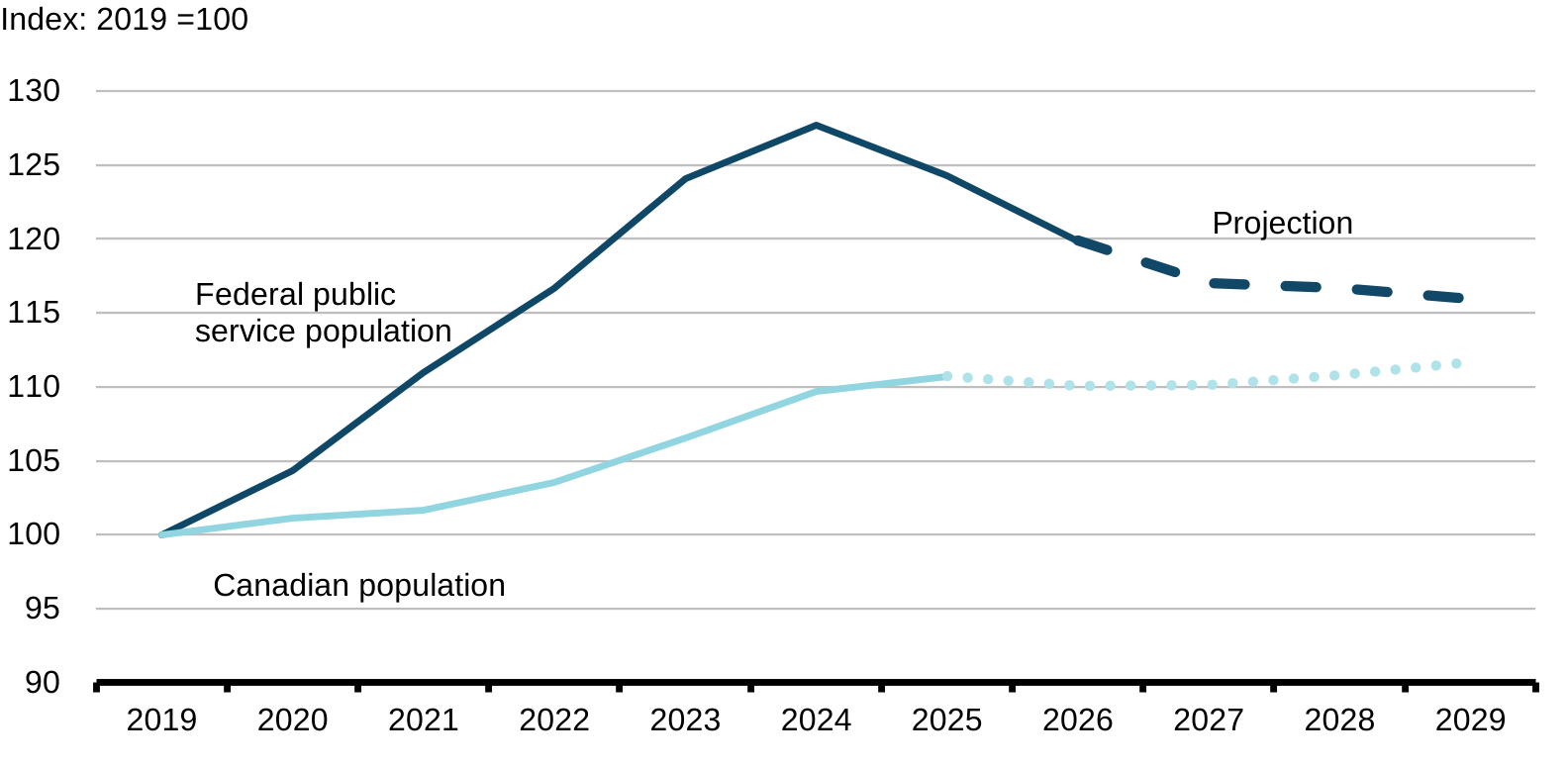
The public service is vital to delivering results for Canadians, but for too long it grew at an unsustainable pace, outstripping the growth in the Canadian population. We took decisive action to return the public service to a sustainable level to refocus on delivering tangible outcomes and results for Canadians.
As part of the Comprehensive Expenditure Review introduced in Budget 2025, we launched the Early Retirement Incentive (ERI) program to support the transition to a leaner, more efficient federal public service while minimising the hardship for departing federal employees. More than 10,000 applications were submitted to the ERI program between March and July 2026.
- As a further step to support a more sustainable size for the federal public service, Budget 2026 announces the government's intention to align organisational operating budgets with personnel savings generated through the ERI program. Where ERI departures exceed planned workforce reductions under the Comprehensive Expenditure Review, a portion of the resulting personnel savings would be reflected in operating budget reductions. This would help ensure savings generated through the program are sustained over time.
Operating budget reductions resulting from this measure are expected to total $400 million over four years, starting in 2027-28, and $100 million ongoing, and reductions will be reflected in the 2027-28 Main Estimates. The ERI is part of the government's continued efforts to ensure that public sector compensation costs are fair and reasonable, while aligning with Canadian labour market trends and our fiscal position. Together, these efforts free up resources for investment in Canada: growing the economy, building major projects, and creating new high-paying careers.
Alongside these efforts, we are also ensuring that savings from changes to employer compensation costs are reflected in the fiscal framework. Accordingly, Budget 2026 captures savings resulting from the reduction in the base Canada Pension Plan contribution rate announced in the Spring Economic Update 2026. As an employer of more than 400,000 people across the federal public service, the Canadian Armed Forces, and the Royal Canadian Mounted Police, the federal government is expected to realise savings of $305 million over five years, beginning in 2026-27, and $78 million of ongoing savings, all without reducing the benefits that individuals currently receive.
Savings from initiatives such as the Comprehensive Expenditure Review are helping contain costs and return the public service to a more sustainable size.
Budget 2025 projected that the federal public service would decline by about 40,000 positions, or 10%, by 2028-29. As of August 2026, the size of the public service had fallen by nearly 10% from its 2023-24 peak of about 368,000 employees, to about 332,000 employees, according to reporting by the Treasury Board of Canada Secretariat.
A public service that keeps pace with Canada
Modernising Canada Post
The Canada Post Corporation is a longstanding national institution that provides postal services to all Canadians. Yet the use of traditional letter mail for communication and commerce continues to decline, and Canada Post's existing model no longer works for 21st-century Canada's needs. This is why we are taking steps to improve the corporation's efficiency, accountability, and long-term financial sustainability, ensuring it continues to provide its critical services and keep our postal service delivering for Canadians. Budget 2026 proposes to:
- Provide additional support to Canada Post's operations including $1.4 billion over two years.
- Provide $1.2 billion over seven years to support the conversion of urban door-to-door mail delivery to community mailboxes. First announced in September 2025, the transition will streamline operations while maintaining high service standards and is expected to generate approximately $2.2 billion in savings over 10 years, helping put Canada Post back on the path toward financial sustainability.
- Help bring Canada Post's stamp pricing more closely in line with OECD peers by raising stamp rates, beginning in 2027, to $2.00 for single stamps and 7% per year continuously. This measure will have a relatively limited impact on consumers and small businesses, with an estimate of only approximately $6 per year for consumers and $9 per year for small businesses. This increase will further offset costs while ensuring continuous affordability.
- Increase Canada Post Corporation's Annual Reference Levels by $101.4 million from 2026-27 to 2030-31, and $28 million in future years to fund the special postage rate for library materials and for expanded postal inspections, particularly in Indigenous, northern, and remote communities.
Update on ongoing horizontal reviews
Horizontal reviews of federal programs and activities are part of the government's approach to identify efficiencies and modernise operations. Following the Spring Economic Update, reviews of federal contracting and the delivery of federal financing were undertaken, with the results set out below. Reviews of business innovation, and skills and youth programming were also launched, with work ongoing to optimise resource use and strengthen expenditure management. Results will continue to be reported in future publications.
Improving Canadians' value for money in federal contracting
Last year, we launched a federal contracting review of major contracts. It identified $55 million in cost avoidance across the highest-value existing contracts and a further $117 million in reductions to planned expenditures for upcoming procurements. The review identified these opportunities through early engagement with industry, clearer project requirements, strengthened performance expectations, and improved pricing strategies. Going forward, these strategies will be adopted as best practices.
The federal contracting review, in combination with our Buy Canadian Policy announced in Budget 2025, demonstrates the government's commitment to ensuring federal procurement most effectively supports Canadian businesses, strengthens domestic economic activity, and delivers better value for Canadian taxpayers.
Streamlining the delivery of federal financing
Canada's financing Crown corporations are a key tool to help promising companies and projects succeed in Canada and expand into international markets. They are particularly important where private capital alone is unavailable to meet the needs of Canadian businesses. At the same time, the increasing number of financing Crown corporations can create confusion among clients about which best fits their needs, create overlap in service delivery, and limit opportunities to improve efficiency and better use taxpayer dollars to build a stronger economy.
To streamline the delivery of federal financing and provide greater clarity and efficiency for project proponents and companies, we completed a comprehensive mandate review of federal financing Crown corporations, as was announced in the Spring Economic Update 2026. This review assessed the mandates and approaches of various federal financing entities, including in relation to the Canada Strong Fund.
To clarify mandates, reduce overlap, and improve coordination across federal financing organisations, the government is proposing through Budget 2026 to:
- Launch a transition process to create a single federal development bank by bringing together the Business Development Bank of Canada and Export Development Canada. The new institution will build on the strengths, expertise, and strong teams of both organisations to provide Canadian businesses with a more integrated suite of financing solutions from domestic growth through to international expansion. A specially constituted Board of Directors will be mandated to oversee the transition, supported by further analysis and consultations with key clients and stakeholders. Existing products and services will be fully maintained throughout the transition.
- Expand the mandate of the Canada Growth Fund to support more economic growth and productivity opportunities in Canada, and ensure it better complements other federal financing instruments.
- Move responsibility for the Canada Infrastructure Bank (CIB) to the Minister of Finance, focus the CIB's mandate on providing loans and loan guarantees to support major investments in Canadian infrastructure, and consolidate the Indigenous Loan Guarantee Program within the CIB. This will centralise Indigenous major project investment support within the CIB and allow it to better execute on its mandate to support projects in Canada.
Taken together, these changes will improve the efficiency of federal financing by reducing duplication, clarifying institutional roles, and strengthening coordination across federal financing organisations.
- To support the implementation of these changes, Budget 2026 proposes to provide $3.5 million over two years, starting in 2026-27, to the Department of Finance Canada to oversee the new financial Crown corporation functions and support the consolidation.
Budget 2026 announces that the government will take steps to ensure financing Crown corporations, including the future single federal development bank, have the flexibility and direction needed to deploy capital in support of Canada's economic priorities. In particular, the government expects financing Crown corporations to have a greater risk tolerance than private sector peers. It is important that government-backed financing complements, rather than simply replicates investments available from private-sector capital market actors. The government will take steps, working with all financing Crown corporations, to consider the adoption of new approaches to diligent investing as well as to structuring investments to balance the Crown's public policy and capital preservation mandates.
6.4 Getting more value from public assets
From airports and transportation infrastructure to research and commercial assets, the Canadian government owns and operates assets that keep us moving, working, and living. As Canada's needs evolve, so must our public assets. Improving and modernising how these are managed, operated, and developed will strengthen services, support their long-term sustainability, and generate greater value for Canadians.
That's why Budget 2026 introduces measures to improve the performance of federal assets, attract investment and expertise where appropriate, and help ensure Canadians continue benefiting from these assets for generations to come.
Generating more value from federal assets
To ensure Canadians are realising the greatest possible benefit from federal assets, we are pursuing new approaches to their management, operation, and long-term development.
For Canada's four largest airports, this means introducing a new operating concession model to help them secure the investment and expertise needed for their next phase of growth. Further information regarding this proposal is outlined in Section 1.1.
In addition to the measures proposed for Canada's largest airports, Budget 2026 announces that the government:
- Continues to advance options to commercialise the Canadian Photonics Fabrication Centre, currently operating under the National Research Council of Canada. The centre is the only end-to-end pure-play compound semiconductor facility in North America. These options will ensure we maximise the value of private-sector capital to scale its operations and help put Canadian enterprises at the forefront of advanced computing technologies for AI.
- Intends to explore opportunities to divest certain federal commercial assets to unlock capital that can be reinvested in other priority projects. This initiative will begin by identifying assets with commercial value that are not core to the government's responsibilities and then developing alternative options for the ownership of those assets.
Consolidating responsibility for federally owned bridges and crossings
Bridges and crossings are more than pieces of infrastructure. They are vital strategic assets to build a stronger Canada: connecting our communities, supporting the movement of people and goods, and helping keep Canada's economy growing. As critical links in Canada's trade and transportation networks, federally owned bridges and crossings must be well managed. As part of the government's efforts to reduce duplication and red tape, Budget 2026 will consolidate crossing authorities to better oversee their operations.
- To strengthen the management of Canada's federally owned bridges and crossings, Budget 2026 confirms the government's intention to consolidate oversight of federally owned bridges and crossings currently under the portfolio of Housing, Infrastructure and Communities Canada. Consolidating oversight under a single portfolio will reduce duplication, strengthen the stewardship of these important public assets, and support a more strategic approach to maintaining and renewing nationally significant trade and transportation infrastructure.
As a first step toward integrated oversight, the Minister of Housing and Infrastructure would newly assume responsibility for:
- the Federal Bridge Corporation Limited and the four international bridges it oversees
- the Confederation Bridge
- the Victoria Bridge
- the Buffalo and Fort Erie Public Bridge Authority
- the New Eastern Bridge and Alexandra Bridge replacement projects in the National Capital Region
Canada's nationally significant crossings

Budget 2026 will make government services simpler and more accessible for Canadians by:
- Simplifying tax filing for people who are disconnected from the tax and benefits system, which could connect more Canadians to federal benefits and could be particularly beneficial for seniors and persons with disabilities with accessibility needs; people with lower incomes; newcomers who may be less familiar with Canada's tax and benefit system; and Indigenous people, including those who may face challenges accessing services in rural and remote communities.
- Migrating the Canada Pension Plan onto a new benefits delivery platform to improve how Canadians access and receive their benefits, helping ensure payments and services are delivered reliably. This would particularly benefit seniors, persons with disabilities, and people with lower incomes for whom timely and dependable access to benefits can be especially important to financial security. Recognising that Canadians have differing levels of digital access and differing accessibility needs, telephone, mail, and in-person service options would remain available alongside expanded digital services.
- Transforming how federal services are designed and delivered by establishing Digital Transformation Canada (DTC). Through the Government Transformation Fund, DTC would support user-focused digital projects that modernise service delivery, reduce duplication, and improve value for taxpayers. This would make federal services simpler, faster, and more accessible for Canadians and businesses. Importantly, projects would consider accessibility and the different circumstances that shape Canadians' ability to use digital services, including digital literacy, connectivity, access to devices, and accessibility needs.
Further information on the expected gender and diversity impacts of Budget 2026 measures across a range of population groups is provided in Annex 4.
| 2026-2027 | 2027-2028 | 2028-2029 | 2029-2030 | 2030-2031 | Total | |
|---|---|---|---|---|---|---|
| 6.1 Simplifying the tax system | 20 | 174 | 287 | 425 | 485 | 1,391 |
| Making it easier for Canadians to manage their taxes | 16 | 114 | 219 | 231 | 241 | 821 |
| Connecting more Canadians to federal benefits | … | 5 | 8 | 138 | 183 | 334 |
| Making it easier to do business | 4 | 55 | 60 | 56 | 61 | 236 |
| 6.2 Making government work better for Canadians | 12 | 146 | 173 | 242 | 226 | 798 |
| Advancing artificial intelligence in government through Digital Transformation Canada* | 12 | 87 | 131 | 192 | 184 | 606 |
| Modernising government benefits and services* | 15 | 79 | 39 | 42 | 60 | 237 |
|
Less: Funds sourced from existing departmental resources
|
… | -21 | 0 | 0 | 0 | -21 |
|
Less: Funds from Canada Pension Plan (CPP) account
|
-15 | -58 | -39 | -42 | -60 | -215 |
| Reinforcing Canada's border infrastructure | … | 59 | 41 | 50 | 42 | 192 |
| 6.3 Lowering the costs of government | 11 | -375 | -470 | -571 | -649 | -2,053 |
| Strengthening the effectiveness of fines and penalties1 | 0* | -17 | -28 | -65 | -77 | -186 |
| Strengthening tax compliance* | … | 25 | 28 | 31 | 33 | 116 |
|
Less: Projected revenues
|
… | -249 | -290 | -310 | -330 | -1,179 |
| Renewing the public service – aligning operating budgets with ERI personnel savings | … | -100 | -100 | -100 | -100 | -400 |
| Renewing the public service – savings on CPP employer contribution costs | -17 | -69 | -71 | -73 | -75 | -305 |
| Modernising Canada Post2 | 32 | 60 | 74 | 86 | 94 | 346 |
|
Less: Projected savings
|
-4 | -28 | -83 | -139 | -194 | -448 |
| Streamlining the delivery of federal financing | 1 | 2 | 0 | 0 | 0 | 3 |
|
Less: amounts provisioned in Budget 2025 for future reviews3
|
… | 375 | 470 | 571 | 649 | 2,064 |
| Additional investments – A more efficient government | 255 | 320 | 114 | 101 | 101 | 890 |
| Information sharing – pension administrators | … | … | -10 | -10 | -10 | -30 |
|
This measure proposes to allow the CRA to share information with an administrator of a registered pension plan about the death of a member who is entitled to an unclaimed pension benefit.
|
||||||
| Registered pension plans | … | … | -50 | -50 | -48 | -148 |
|
This measure introduces specific and clear tax consequences where the CRA revokes the registration of a registered pension plan that does not comply with registration conditions. In addition, it strengthens the integrity rules that apply to individual pension plans.
|
||||||
| Federal fuel excise tax licensing framework | … | 20 | 0 | 0 | 0 | 20 |
|
The measure proposes updates to the fuel excise tax licensing framework and to provide relief for certain past instances where unintended tax burdens occurred.
|
||||||
| GST/HST health measures | 20 | 41 | 46 | 46 | 46 | 199 |
|
This measure proposes to exempt the supply of qualifying massage therapy services and zero-rate devices specially designed to treat cancer using alternating electric field therapy for GST/HST purposes.
|
||||||
| Interest deductibility limits | 235 | 80 | 80 | 80 | 80 | 555 |
|
This measure proposes to expand the exceptions to the excessive interest and financing expenses limitation rules for purpose-built rental housing and regulated energy utility businesses to cover indirect funding within an affiliated group and by broadening the scope of a regulated energy utility business to incorporate prices set by Crown corporations and through government-operated markets.
|
||||||
| The Public Service Occupational Health Program | … | 8 | 11 | 9 | 9 | 38 |
|
Funding proposed for HC to renew occupational health services, medical advice, and guidance that protect federal workers, including correctional officers, border services officers, and other employees who require mandatory occupational health evaluations.
|
||||||
| Supporting employees affected by workplace injuries | … | 137 | – | – | – | 137 |
|
Funding proposed for CSC to meet its statutory obligations as an employer with respect to workplace injury, including physical and psychological injuries.
|
||||||
| Supporting the accountability and modernisation of the Royal Canadian Mounted Police (RCMP) | … | 5 | 5 | 5 | 5 | 18 |
|
Funding proposed for the RCMP to support the implementation of findings from external reviews and the Management Advisory Board, which is a legislated advisory body that provides the RCMP Commissioner with independent expert advice in areas such as governance, risk management, and resource stewardship.
|
||||||
| Strengthening the Courts Administration Service (CAS)* | … | 12 | 14 | 17 | 15 | 58 |
|
Funding proposed for CAS to support compliance with the Official Languages Act and reduce the existing translation backlog, help the Federal Court manage elevated caseloads, as well as complete work to modernise the infrastructure that supports Canada's national courts.
|
||||||
| Improving technical support for the My Service Canada Account4 | … | 15 | 15 | – | – | 30 |
|
Less: Funds from CPP account
|
… | -1 | -1 | – | – | -2 |
|
Funding proposed for ESDC to renew support for Canadians who need help accessing their My Service Canada Account and the benefits and services it supports, including Employment Insurance, the Canada Pension Plan and Old Age Security.
|
||||||
| Archiving the records of former Prime Minister Trudeau | … | 3 | 3 | 3 | 3 | 12 |
|
Funding proposed for LAC to acquire, preserve, and provide Canadians with access to the records of Canada's 23rd Prime Minister, the Right Honourable Justin Trudeau.
|
||||||
| Supporting lieutenant governors | … | 1 | 1 | 1 | 1 | 3 |
|
Funding proposed for PCH to support lieutenant governors in carrying out their roles and responsibilities.
|
||||||
| Chapter 6 - Net fiscal impact | 298 | 639 | 573 | 767 | 813 | 3,091 |
|
Of which, capital investment:
|
2 | 23 | 87 | 126 | 175 | 413 |
|
1 Includes $3.4 million over four years, starting in 2027-28, and $1 million ongoing to Fisheries and Oceans Canada to implement an administrative monetary penalties regime under the Fisheries Act. 2 Numbers reflect incremental savings resulting from modernisation activities at Canada Post Corporation. Canada Post Corporation's overall net operating losses are accounted for in the fiscal framework and included in the Public Accounts. 3 After measures in this budget and savings from the review of external management and other consulting services announced in SEU 2026, the balance of savings to be identified at a future date is $0.5 billion in 2027-28, and an average of $1.8 billion annually from 2028-29 to 2030-31. 4 This measure includes Employment Insurance (EI) expenditures which will be sourced from the fiscal framework, charged to the EI Operating Account, and ultimately recovered through future EI premiums. EI premiums will be set according to the seven-year break-even mechanism in order to recover these costs. Note: i. An ellipsis (….) indicates no adjustments to existing funding levels (that is, no additional funding, or reduction in funding, is being proposed), or no funding implications (for example, a one-time event or a new program that begins in future years). ii. A dash (-) indicates that consideration of a further extension will occur at a later time. iii. A starred 0 (0*) indicates an amount of less than $0.5 million, which rounds to zero in this table. iv. Measures that include funding classified as a capital investment are marked with an asterisk (*). v. Numbers may not add due to rounding. vi. A glossary of abbreviations used in this table can be found at the end of Annex 1. |
||||||
Page details
- Date modified: